Not legal advice. Copyright law differs between countries and depends on the details of each case. This is a general explanation of common practice. If your business depends on reusing other people's content, ask a lawyer and, better still, ask the publisher.
What a Public Feed Allows
Publishing a feed is an invitation to subscribe. By offering one, a publisher clearly expects people to read the content in feed readers, and to receive it through apps, email tools and bots that deliver it to them personally. That is what feeds are for.
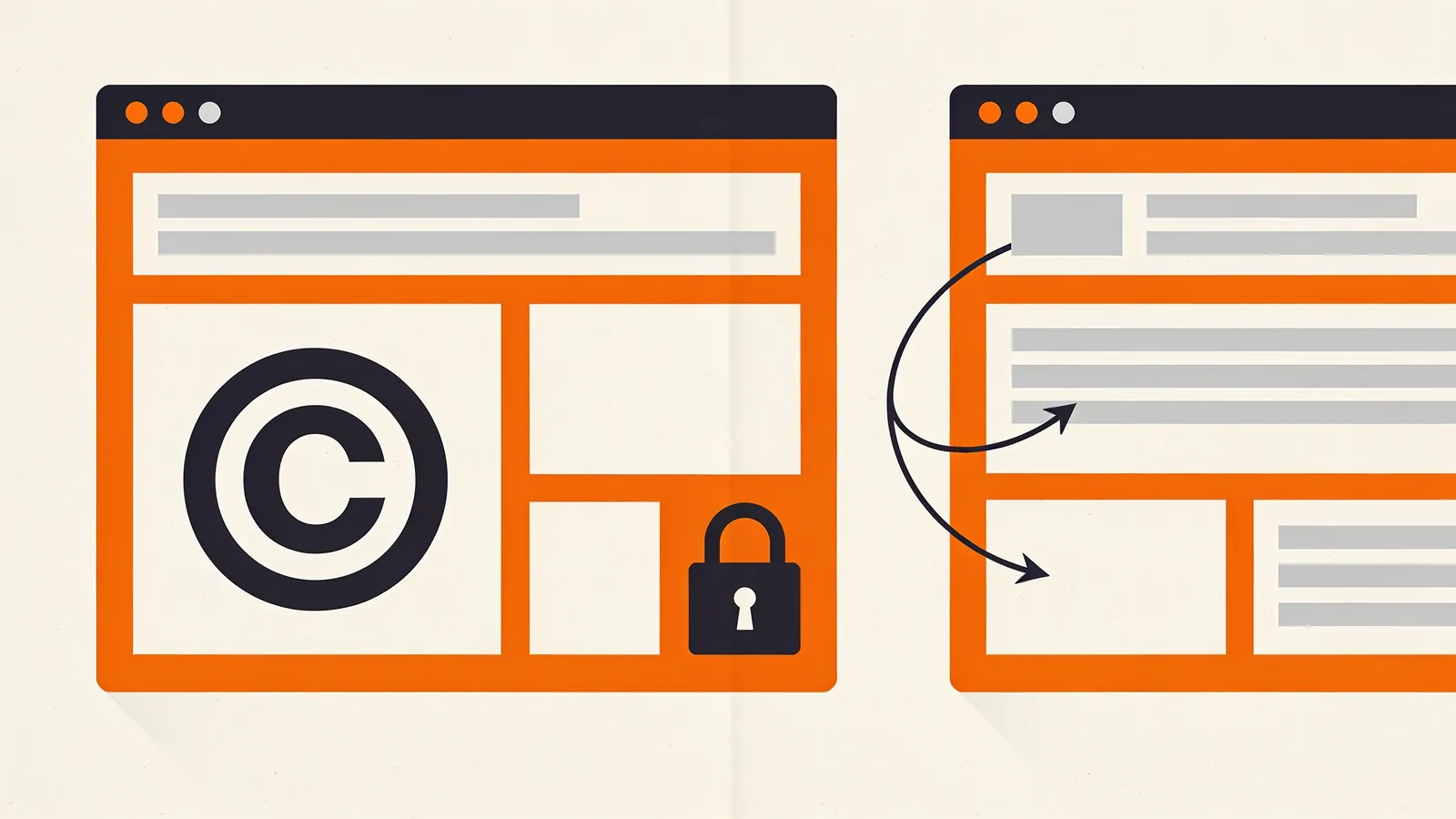
A feed is not a licence. The articles in it are protected by copyright in the same way as on the website, and the absence of a copyright notice in the feed changes nothing. Unless the publisher grants more rights, a public feed does not by itself give permission to copy the content to another public website.
From Safe to Risky
| What you do | Generally | Why |
|---|---|---|
| Read a feed in a reader, for yourself | Fine | This is the purpose of a feed. |
| Send new items to yourself or your team by email, Slack or Discord | Fine | Private delivery to the readers who chose to follow it. |
| Show headlines with links on your site | Usually fine | Titles are short and the links send readers to the publisher. Respect explicit objections. |
| Show headlines with short excerpts | Usually fine with attribution | Brief quotes with a clear source are common practice; keep them short. |
| Show full articles or images on your site | Needs permission | This is republishing. It competes with the original and can also create duplicate content. |
| Build an automatic site from other people's feeds | Risky, also for search | Besides copyright, Google treats sites built from copied feeds without added value as spam. |
Attribution Is Necessary, Not Sufficient
Naming the source and linking to it is required for any reuse, but it does not turn copying into permission. "Source: Example News" under a full copied article is still a copied article. Attribution protects you when what you show is small and transforms nothing important, like a headline in a list; it does not cover the article itself.
Feeds That Grant More Rights
Some publishers explicitly allow reuse. Look for:
- a licence element in the feed, such as
<copyright>mentioning a Creative Commons licence, or<link rel="license">in Atom; - a reuse or syndication policy on the website, common for government bodies, press release services and some research institutions;
- a partner or syndication agreement, which is how news agencies and many news sites share content.
A Creative Commons licence still has conditions. CC BY requires attribution, CC BY-NC forbids commercial use and CC BY-ND forbids changes. Read the specific licence.
Images Are a Separate Problem
Images in feeds are often licensed by the publisher from a photo agency for use on their own site only. Even a publisher who is happy to see headlines reused may not be allowed to let you use their pictures. Hotlinking, showing the image directly from their server, avoids copying the file but not the question of rights, and it uses their bandwidth. When in doubt, show headlines without images.
How RSSFeeds.com Handles This
Our own tools are built around these lines. The directory shows feed titles, short descriptions and headlines that link to the publisher. The feed merger passes on titles, links and summaries of at most 280 characters with the source named in every item, and never copies full articles or images. The feed widget shows headlines with links by default. If you use these tools on a public website, the responsibility for what you show is still yours.
If You Publish a Feed
You decide how your content may be used. To make that clear, add a short statement to the <copyright> element of your feed and a reuse policy on your site. Publishing summaries instead of full text in the feed reduces copying but annoys readers; most publishers find that full text with clear terms works better. If someone republishes your full articles, contact them first; a feed is often reused out of ignorance rather than bad intent.
Questions
Can I republish articles from another RSS feed?
Not without permission, unless the feed comes with a licence that allows it. A public feed lets people subscribe and read, but the articles are still protected by copyright. Headlines with links back to the source are widely accepted; full articles and images are not.
Should I copy full RSS descriptions onto my own pages?
No. Even when you have permission, pages made mostly of other sites' text add little for visitors and search engines see them as duplicate or scraped content. Use short, attributed excerpts and add something of your own: a comparison, an explanation or a useful way to filter the information.
Is it legal to show an RSS feed on my website?
Showing headlines that link to the original is common and generally accepted, and many publishers welcome it as a source of visits. Showing full articles requires permission. Some publishers state their terms for feed use; follow them when they do.
Sources and Further Reading
- About the LicensesCreative Commons