Feed Standards and Specifications
Reference pages for every feed format and extension in use today, with all elements, attributes, rules and copy-ready examples.

- RSS 2.0 Specification ExplainedEvery channel and item element, with rules and examples.
- Atom 1.0 Syndication FormatRFC 4287: feed and entry elements, text constructs and links.
- JSON Feed 1.1 ExplainedThe JSON-based feed format: every field and attachment.
- RSS 1.0 and RSS 0.9xThe RDF-based RSS 1.0 and the early 0.90, 0.91 and 0.92 versions.
- Podcast RSS FeedsApple Podcasts tags and the Podcasting 2.0 namespace.
- RSS Namespaces and Extensionscontent, dc, atom, media, sy, slash, wfw, georss and more.
- OPML: Outline Processor Markup LanguageThe format for exporting and sharing subscription lists.
- RSS Feed Examples and TemplatesCopy-ready RSS, Atom, JSON Feed and podcast feed templates.
- Real-Time Feeds: WebSub, rssCloud and PodpingPush updates with WebSub, rssCloud and Podping instead of polling.
Feed Formats at a Glance
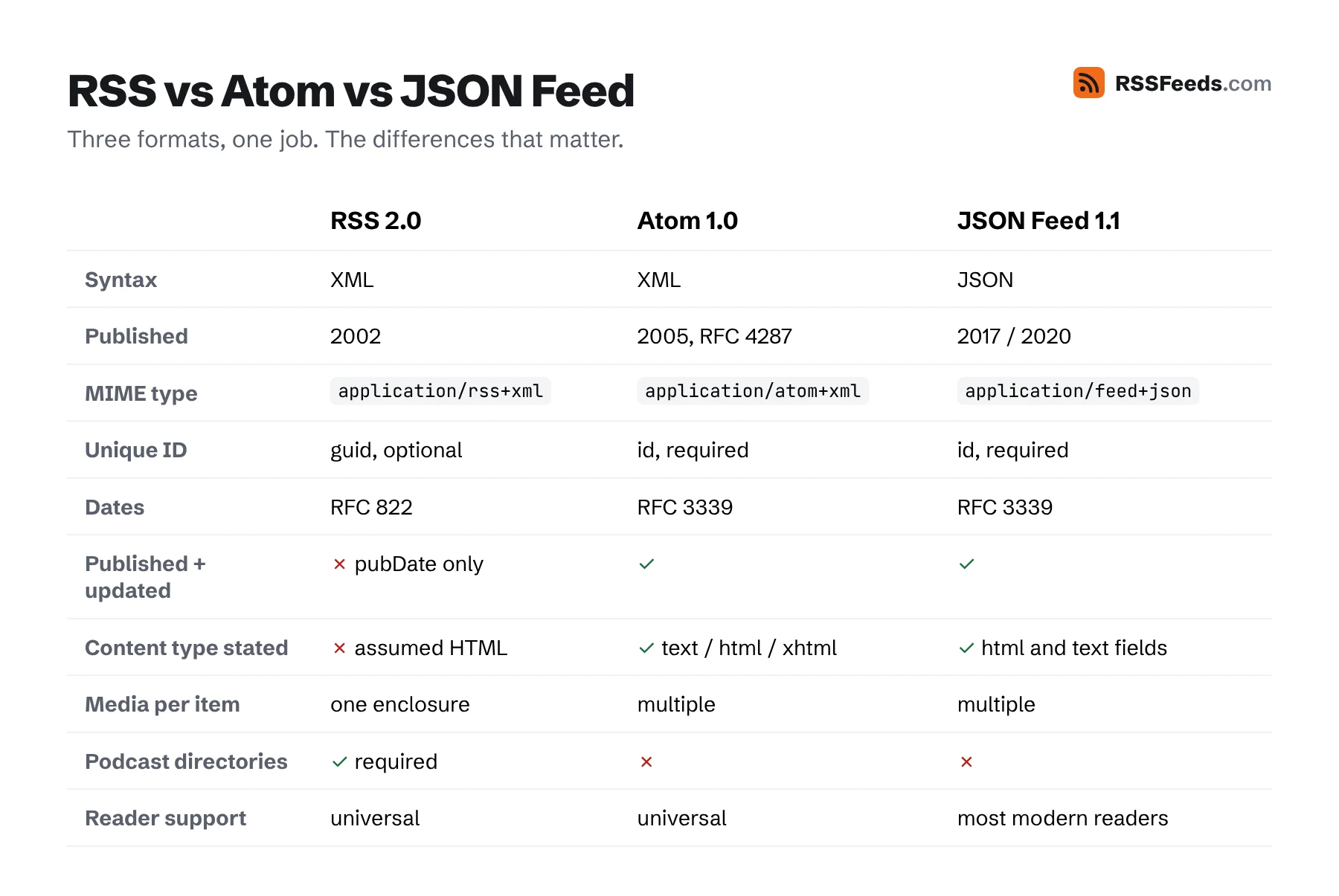
| Format | Published | Maintained by | MIME type | Status |
|---|---|---|---|---|
| RSS 2.0 | 2002 | RSS Advisory Board | application/rss+xml | Most widely used, frozen |
| Atom 1.0 | 2005 (RFC 4287) | IETF | application/atom+xml | Stable internet standard |
| JSON Feed 1.1 | 2017, 1.1 in 2020 | Brent Simmons, Manton Reece | application/feed+json | Stable, growing support |
| RSS 1.0 | 2000 | RSS-DEV Working Group | application/rdf+xml | Legacy, still readable |
| RSS 0.9x | 1999–2000 | Netscape, UserLand | application/rss+xml | Obsolete |
| OPML 2.0 | 2006 | Dave Winer | text/x-opml | Subscription lists |
| WebSub | 2018 | W3C | – | Push notifications for feeds |
Unsure which to publish? Read RSS vs Atom vs JSON Feed. Want to know how the formats came to be? See History of RSS.